
Lift a ceiling tile in an office building that’s seen a few tenants, and there’s a good chance you’ll find bundles of cable that haven’t carried a signal in years. Every phone system swap and network upgrade adds new lines, while the old ones tend to stay right where they were installed.
When a property manager or business owner finally calls a cabling removal company in San Diego to deal with that buildup, the work usually goes by a specific name: cable abatement. The term comes up often during renovations and lease turnovers, yet it’s rarely explained in plain language. Below, we’re breaking down what the cable abatement process actually involves and which kinds of cable can come out of a building.
What is cable abatement?

Cable abatement is the planned process of identifying and taking out cable that no longer serves a purpose, along with the hardware that once supported it. Most of that cable is low-voltage wire sitting above drop ceilings or under raised floors.
Under the National Electrical Code (NEC), cable counts as abandoned when it isn’t terminated at equipment and hasn’t been tagged for future use. That shifts the question from “Is this cable old?” to “Is anything still using it?” A decade-old run feeding an active workstation can stay, while a newer line orphaned during last year’s office shuffle should go.
Why dead cable is more than clutter
Cable jackets are made largely of plastic, and plastic burns. Even plenum-rated cable, built to limit flame spread and smoke in air-handling spaces, still adds fuel to a ceiling cavity. That concern helped push the NEC to require that accessible portions of abandoned cable come out, starting with its 2002 edition. How strictly the rule is enforced depends on the local jurisdiction and the type of project.
Dead bundles add weight to ceiling supports and crowd the pathways new cable will need. They slow troubleshooting, too, since technicians have to sort live lines from dead ones before fixing anything. Facility teams that know the warning signs of forgotten wire overhead tend to spot the buildup long before an inspector does.
Who typically needs it
Abatement isn’t reserved for one kind of property, but it tends to come up at predictable moments:
- Renovations and remodels: With ceilings already open, taking out old lines before construction starts is far simpler than reopening finished spaces later.
- Lease turnovers: Some commercial leases require departing tenants to clear their low-voltage cable before handing back the keys.
- Network upgrades: Moving to Cat6A or fiber leaves the previous generation of copper behind, eating up tray space the new runs need.
- Server rooms and data centers: Dead cable under raised floors can block the airflow that keeps equipment cool.
- Closely inspected facilities: Healthcare and government buildings often schedule abatement to stay ahead of fire and building code reviews.
What types of cables can be removed from a building?
Nearly any low-voltage cable can come out once it’s confirmed dead and reachable without damaging the building. The NEC’s abandoned-cable rules span several system types, so most projects involve far more than network wire:
- Data and voice cable: Old Cat3 phone lines and Cat5 or Cat5e runs are what most people picture, along with the bulky multi-pair backbones left by retired phone systems.
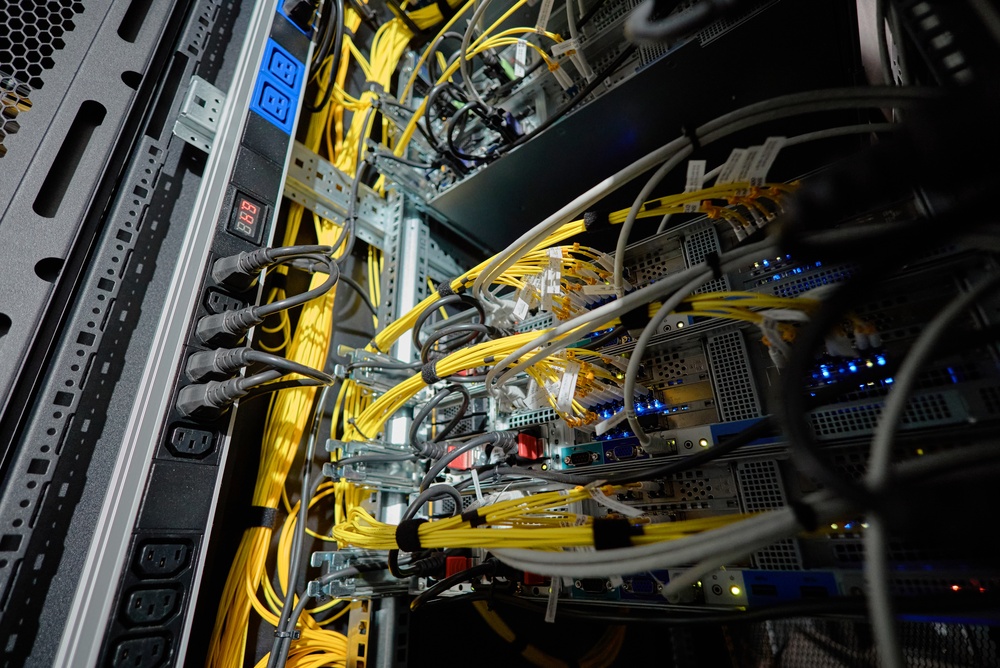
- Fiber optic cable: Older runs are often abandoned when a building upgrades its backbone, and they’re just as eligible to come out as copper.
- Coaxial cable: Former cable TV feeds and analog security camera lines frequently leave coax behind.
- Security and AV wiring: Retired card readers, intercoms, paging speakers, and conference room systems all strand cable when the equipment goes.
- Fire alarm cable: Wiring from a replaced alarm system falls under similar rules but should only come out once the old system is confirmed offline.
The hardware that comes out with it
Cable rarely leaves on its own. A thorough job also clears the dead jacks, patch panels, punch-down blocks, and J-hooks tied to those runs. Some facility owners put this requirement in writing. One set of university standards for abandoned cable requires contractors to pull the supporting hardware along with the cable and repair any openings left behind. Penetrations through fire-rated walls should be properly firestopped afterward, and copper from the old runs can usually be recycled.
What usually stays put
Not every wire in the building is a candidate. Cable tagged for future use can stay, and wire sealed inside finished walls generally isn’t considered accessible, so nobody expects you to tear out drywall to reach it. The bigger danger is assuming a line is dead when it isn’t. A run that looks abandoned may still feed a security camera or a back-office phone, which is why tracing and testing should happen before anyone cuts anything.
Line-voltage power wiring is a separate matter. The abandoned-cable provisions center on low-voltage systems, while power circuits belong to licensed electricians, so sort out which trade should handle which wires before scheduling the work.
What’s the leading cabling removal company in San Diego?

We’d like to think it’s Network Cabling, though we’d rather earn that answer than claim it. Our team has spent more than 30 years working above ceilings and under raised floors across the region, so little surprises us anymore.
Before anything gets cut, we walk your space and test the lines to find out what’s still live, because nobody wants a security camera or front-desk phone going dark mid-project.
We’re licensed and fully insured, and you’ll walk away with documentation your IT team can actually use. If your building is near Petco Park or closer to our Escondido headquarters, we’d love to take a look. Tell us what’s hiding above your ceiling, and we’ll put together a free quote.