
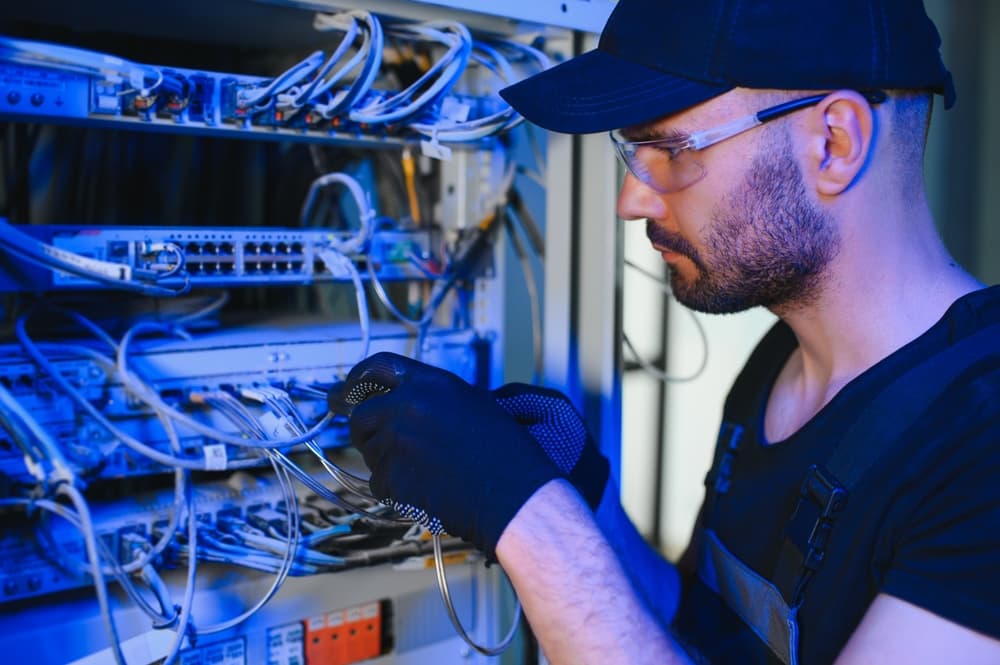
What is considered a low-voltage cable?
Low-voltage cables carry electrical signals at a much lower voltage than standard wiring, usually under 50 volts. You’ll find them in lots of everyday applications, such as:
- Telephone and data lines
- Ethernet/network cabling
- Security system wiring
- Alarm systems
- Intercom and audio/video setups
Unlike household power lines, low-voltage cables don’t supply energy to outlets or appliances. But they still carry signals that are crucial for communication, security, and tech systems. Even though they’re low-voltage, handling them the wrong way can disrupt operations or damage connected devices.
If you’re planning to clear out old network wiring before moving, hiring a professional is your best bet for doing it safely.
Is it safe to cut low-voltage wire?
Well, for the most part, low-voltage cables are safer to work with than standard electrical wiring, but that doesn’t mean you can just snip them without caution.
Some low-voltage systems, like Power over Ethernet (PoE) cables, still carry small amounts of electricity, and cutting them without testing could damage connected devices or give you an electrical shock.
It’s also easy to accidentally cut an active line if cables are unlabeled or tangled, which can knock out network systems, security cameras, or alarm panels. That’s why experts recommend letting trained technicians handle low-voltage wire removal.
Are low-voltage wires a fire hazard?
The shortest answer is: yes.
While low-voltage cables don’t usually spark or overheat like high-voltage lines, they definitely aren’t risk-free. Over time, insulation can crack, degrade, or dry out, especially in older or poorly installed wiring.
In some cases, PoE cables or wires bundled closely with power lines could build up heat and create a fire risk. Which is why when you hire a professional, they can assess, label, and remove old wiring to eliminate these hazards, protecting both your building and all of the people inside.
Do low-voltage wires need to be capped?
Absolutely! Any exposed low-voltage cable should be properly terminated or capped to prevent short circuits, interference, or accidental contact. And yes, that includes wires that are no longer in use but remain in walls, ceilings, or junction boxes should be capped or clearly labeled for future reference.
This keeps your setup safe, ensures smooth future upgrades, and keeps you compliant with building codes and industry standards.
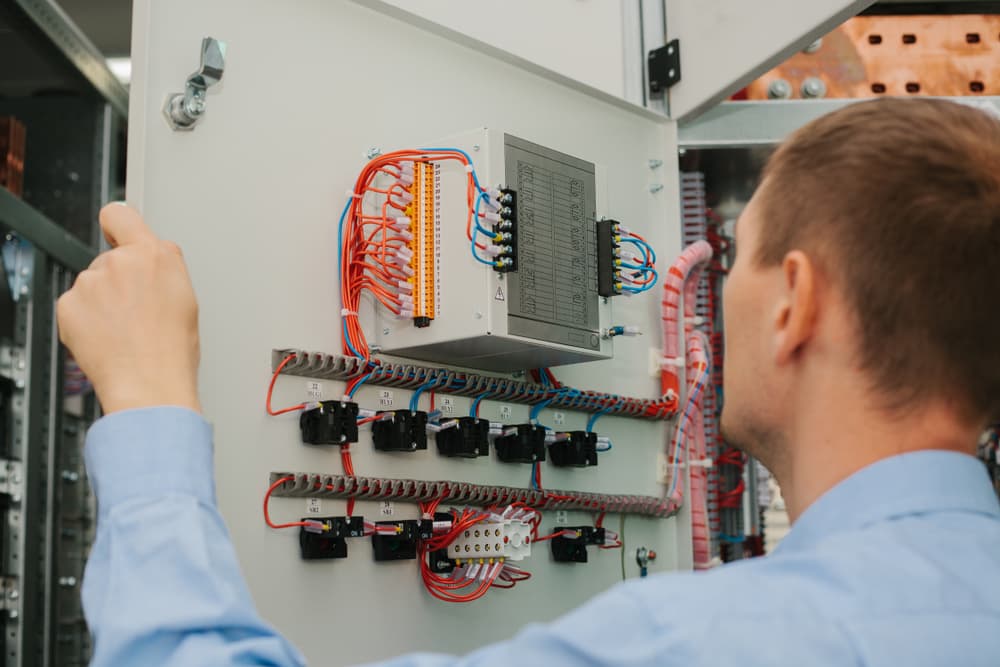 Where can I find a reputable low-voltage cable removal contractor in San Diego?
The safest way to handle low-voltage wiring removal is to hire a certified, experienced contractor. And at Network Cabling, we have just the people for the job.
Bringing over 30 years of experience, advanced tools, and a careful, systematic approach to every project, our team ensures every cable is properly identified, removed, and documented. Whether your building is near Petco Park or anywhere else in San Diego, our team works to minimize disruption, ensure compliance, and prepare your facility for future upgrades.
For a safe, efficient, and professional service, give us a call today and schedule a consultation!